Pages

Saturday, September 3, 2011

Adafruit Releases the Pulsing, Glowing iNecklace

Adafruit Releases the Pulsing, Glowing iNecklace:re-blog from AppleInsider


iNecklace by Adafruit from adafruit industries on Vimeo.


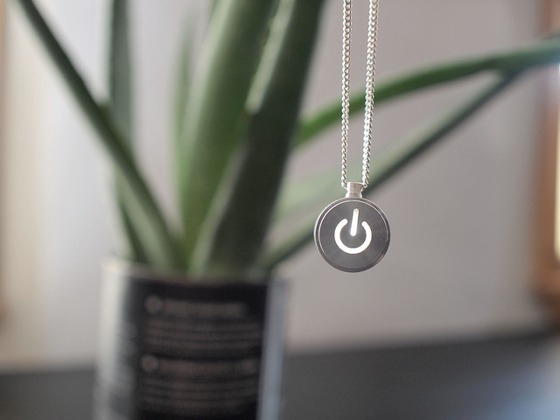
Adafruit Industries has released a necklace companion to the pulsing iCufflinks. The iNecklace is a CNC machined aluminum pendant with a pulsing LED that glows like the sleep-indicator on MacBook Pro's.


The necklace pendant is CNC machined from the finest 6 series aluminum for durability and beauty. The iNecklace is a remarkable accessory. Machined with a "screw in backing" that allows easy access to the battery using a coin. Each iNecklace pendant contains a circuit board with pulsating LED and battery. The pendant comes strung on a 18" long sterling silver 1.6mm diamond-cut curb chain that has been treated to inhibit tarnishing.


Like with the iCufflink, the iNecklace emulates the pulsing LED in Apple's sleep indicator, an Apple patented technology that Adafruit reverse engineered. Apple found that the by mimicking human breathing for their sleep indicator, it was more "psychologically appealing and superior" to other waveforms.


Adafruit has a limited supply of the iNecklace available for $75. The iCufflinks are $128 but currently out of stock.


Friday, September 2, 2011

Kristofer Ström: 16bit’s “Dinosaurs”

Kristofer Ström: 16bit’s “Dinosaurs”:Posted on Motionographer


Kristofer Ström directs and animates a DUBSTEP DINO ATTACKKKKK for 16bit’s “Dinosaurs.” And he made some wallpapers for your desktop, too!


The First Digital 3D Rendered Movie (1972)

The First Digital 3D Rendered Movie (1972): Posted on Motionographer


Check out this incredible early digital animation of Ed Catmull’s left hand, thanks to Robby Ingebretsen and his dad (via kottke.org)


Industrial Revolutions

Industrial Revolutions:re-blog from CoolHunting
A new clip showing Danny MacAskill's unbelievable bike skills

Danny-bicycle-image.jpg

As part of the U.K.'s Channel 4 series on urban action sports, Concrete Circus, Scotsman Danny MacAskill weaves, winds, hops, flips and otherwise impressively maneuvers his way through an abandoned ironworks factory in his native land. The entire collection of documentaries showcases specialized athletes in and out of their natural urban element, but few demand such widespread attention as MacAskill—as this clip proves.


Thanks to our friend Joey Lasley for the heads up, story via Pinkbike.

Paul Budnitz Bicycles

Paul Budnitz Bicycles: re-blog from CoolHunting

Titanium city bikes from the founder of Kidrobot
Paul-B-one-alone.jpg

Kidrobot founder Paul Budnitz always has something new up his sleeve—Swatch watches being the latest cult object to which he's applied his winning pop culture formula. But his newest project takes the entrepreneur in a direction pretty much free of all the saturated colors and vector graphics of Kidrobot. Launching today, Paul Budnitz Bicycles is his answer to the bike phenomenon. Disappointed with the offerings of the commuter market, Budnitz saw the need for a well-made, comfortable bicycle designed specifically for the design-conscious rider. Aiming to fill this gap, the all-titanium bikes have clean, sinuous lines and superior components, also chosen with an eye for looks.

Paul-B-chain-1.jpg


One of the top American frame builders ("arguably the top Titanium frame maker in the world," says Budnitz), Lynskey Performance, custom fabricates each piece by piece—from frame and fork to stem and bars. The cantilever frame absorbs more shock than traditional frames and titanium won't rust or corrode. When the bikes get to Colorado, builders outfit each bike with a carbon Gates belt (to keep you clean and clear of chain problems), along with the finest top-end components from the like of Chris King and Phil Wood.


"Most high-end bicycle parts are actually pretty ugly," Budnitz explains. "I was inspired by classic Aston Martins and '80s-era Maseratis," emphasizing his goal to create bikes that look timeless.


Paul-B-one-1.jpg

No.1, an unbelievably lightweight commuter (the frame is under 3.3 pounds), has a sleek look, defined by a split top tube elegantly forming a continuous arc by integrating into the seat stays. Designed to be a urban cyclist's dream, it's easy to imagine how this fast and agile machine will look equally great sprinting to the gym in L.A. or, as Budnitz did recently, cruising to a black-tie event in Amsterdam.


Paul-B-two-3.jpg

The second similarly lightweight model, No.2, has a more fun, relaxed feel, built more for ambling around town than for distance rides. What Budnitz calls a "BMX bike for adults," fatter tires, a rear wheel that's smaller than the front and softer frame geometry make for a ride that's overall smoother than No.1. The different size tires mean the No.2 accelerates fast and holds its speed too.


Paul-B-seatstay-2.jpg Paul-B-badge-2.jpg


Due to overwhelmingly positive on-street response to prototypes, the first run sold out even before the company's official site launch. But the second production run is now available for order with an expected delivery date of Holiday 2011—if you have the $5,500 that they each cost. Add on another $750 if you want an 11-speed over a single-speed internal hub.

Phoenix International Media Center

Phoenix International Media Center: re-blog from CoolHunting

Chinese architects Biad UFO build Beijing's latest architectural feat

phoenixmedia3.jpg

Hand in hand with China's overall rapid growth and explosive urbanization, recent years have seen a wave of high-design architecture. The
Office for Metropolitan Architecture's
spectacular CCTV tower, opened in 2008 to house the nation's central television headquarters, is a fantastic example of forward-thinking architecture exploring contemporary concepts of shape and form. Now another Chinese media mogul is taking a swing at making their mark on Beijing's urban landscape, picking up where projects like the CCTV building left off after the boom spurred by the 2008 Olympics. The Phoenix International Media Center, scheduled to be completed in 2012, currently stands half complete adjacent to Chaoyang Park, signaling the ongoing development of radical architecture in the country as well as Chinese architects themselves, not to mention the strength of Chinese TV networks.


phoenixmedia1.jpg

Phoenix, a large satellite TV provider, will eventually move their programming operations there, in addition to housing other businesses, offices and restaurants. The shape of the building recalls yet another famously stunning example of what's been happening to Beijing's cityscape of late, the Herzog and De Meuron "Bird's Nest" Olympic Stadium. Here, the architects have managed to give the basket-like shape a sense of movement, reminiscent of a sea sponge or jellyfish. Digital renderings have the feel of the command bridge on a futuristic space station. The ambitious project has already drummed up a lot of interest, putting it on the shortlist for the 2009 World Architecture Festival and in the Verso Est Chinese Cultural Landscape exhibit at MAXXI in Rome.


phoenixmedia2.jpg

Unlike the CCTV tower, the Media Center was designed by BIAD UFo, a firm based in China. An impressive example of the nation's homegrown architectural talents in the country, it hints at the potential future of Chinese design as more and more buildings spring up.

Ken Block's Gymkhana Four: The Hollywood Megamercial

Ken Block's Gymkhana Four: The Hollywood Megamercial:re-blog from CRBlog


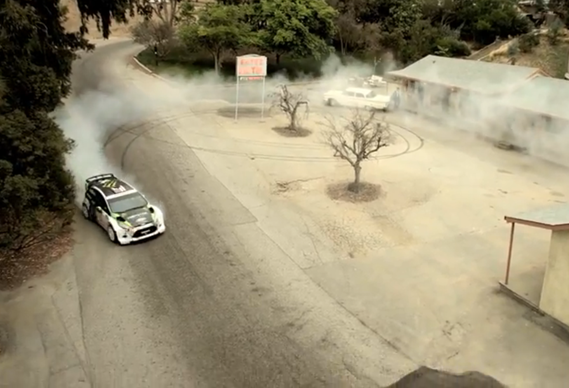
Posted on YouTube on Tuesday, DC Shoes' latest short film showcasing their sponsored Gymkhana driver Ken Block has already clocked up over 3.5 million viewings. We thought we'd flag it up as there's some rather nice action-film-referencing typography in it – not to mention robotic sharks, deranged zombies, pyrotechnics, massive stunts and some pretty impressive driving skills...

For those of you that don't know what Gymkhana is (we didn't until an hour ago), it's a motorsport where competitors vie for the fastest time around a usually complex course – but also perform different driving techniques from spins, figure 8s and, where possible or necessary, drifting. Nothing will explain it better than this nine minute film - shot by director Ben Conrad (who created the opening title sequences for Zombieland / 30 Seconds or Less) of motion design, TV and branding agency, Logan in Los Angeles.


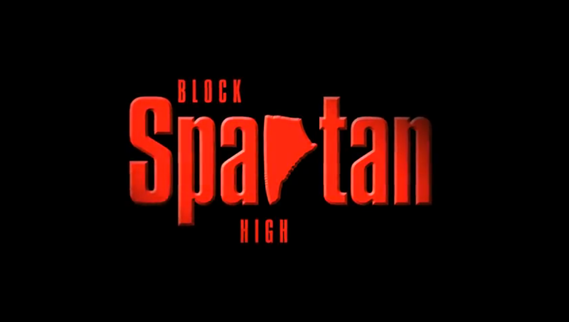
At nine minutes, the film is probably a little longer than it needs to be, but as a promotional film for the motorsport Gymkhana, the skills of driver Ken Block, and a plug for DC Shoes, well, it's not bad. The film-referencing typographic work in the opening sequence was created by designer Corey Holms who now works in house at Logan. Here are a few stills showing some of the frames from the opening sequence. Can you name all the films alluded to?


There's a behind the scenes, making-of film (but of course) too. Find it here

Credits

Director Ben Conrad
Production co Logan
Executive producer Matt Marquis
Line producer Rick Brown
Concept director Ken Block
Editor Volkert Besseling
Cinematography Stephen Blackman
Creative director Nate Morley
Creative consultant Brian Scotto
Post producer Pierre Nobile
Title design Corey Holms
Sound design Keith Ruggiero
Post supervisor Vincent Wauters
Original music by Money Mark

15 Wallpaper* covers by 15 image makers

15 Wallpaper* covers by 15 image makers:re-blog from CRBlog


Wallpaper* has collaborated with GFSmith on a cover project that looks to celebrate the magazine's 15th anniversary. 15 designers or brands were approached to each create a special cover design, to be printed on Colorplan paper stock. Collaborators include Build, It's Nice That, James Joyce, MadeThought, Nike, and Spin...

"Wallpaper* asked us to commission 15 designers to each produce a 'celebrity' bespoke cover around the concept of Wallpaper* Famous for 15 years'," explains GFSmith's James Groves.

"In the true sense of bespoke, using digital printing by FE Burman, each cover design was printed on to the stock of the designer's choosing from our Colorplan range," continues Groves. "FE Burman pushed the printing by using many different processes including multiple passes of white ink. The results show how choice of paper plays an integral part of the design process."

Without further ado, here are the 15 covers:


1. James Joyce's design is printed on Cool Grey


2. Peter Crawley and Mark Blamire chose Turquoise Colorplan for their collaborative design


3. Paul Antonio's design appears on Dark Grey


4. And Nike's design appears, appropriately, on Park Green


5. Plus Agency opted for Vellum White


6. Build / Factory Yellow


7. Regard's design is on White Frost


8. Ico's design is printed on Mandarin


9. And Agent Provocateur's design is on Candy Pink


10. Accept & Proceed Real Grey


11. MadeThought / Mist


12. Johanna Bonnevier for Topshop is printed on Citrine


13. Spin / Harvest


14. It's Nice That / Lavender


15. Studio Makgill / Powder Green

Sadly, the covers have been produced in super-limited editions so won't be available on newsstands or even to subscribers, although an exhibition is planned to show off the work of the 15 designers and to further celebrate the magazine's 15th anniversary.


Turner Duckworth gives Diet Coke new look

Turner Duckworth gives Diet Coke new look:re-blog from CRBlog


Following its multi-award-winning repackaging of Coca-Cola, Turner Duckworth has created a new look for Diet Coke based on a cropped version of the brand's logo


The new packaging, which Coke says is a 'limited edition' (for now at least) uses a graphic that is basically a crop of the logo wrapped around the can – full versions are also applied just in case shoppers were unable to identify the brand. Put two of the cans together and the word 'OK' is (sort of) spelled out.

Here's how the new look will work on multipacks


and in bottle form


The design world was split on Turner Duckworth's previous Coke work (selection below) which involved stripping away a lot of the extraneous clutter that has come to feature on most soft drink cans. Although the work won just about every major award going following its launch in 2008, some designers thought it too 'easy' or obvious a solution – perhaps ignoring how difficult it must be to get big FMCG brands to just leave well alone for once.


According to AdWeek Coke is saying that “this new concept will only be around for a short time.” We shall see.