Pages

Showing posts with label photography. Show all posts

Monday, July 16, 2012

Back to Basics: from paper to paper

Back to Basics: from paper to paper:re-block from Polkadot

Welcome back Eigthies!

Thanks to the creative duo of Zim&Zou (Lucie Thomas + Thibault Zimmermann, both 25 y.o.), a French studio based in Nancy, 80′s style is now alive and fluo in form of paper sculptures. This series, ’80s pieces of design and tech, is one of their best ones in terms of incredible “paper-living” art and color blocking. No words enough to describe the incredible richness of details and the ability in the art of crafting. Don’t miss their whole portfolio: they can easily explore different fields including paper sculpture, installation, graphic design and illustration.


Portraits Using People by Alan Craig


Artist Alan Craig recreates famous iconic photographs with unique giant portraits using aerial photography. Similar to pixels, gatherings of people create these intricately composed portraits. Among some of the portraits recaptured are of the late Elvis Presley, Lucille Ball, and Marilyn Monroe. Most of the people used to create this project are outfitted in dark clothing to contrast easily with the stark white ground used as the back drop. Select areas use color to create a differentiation where the lips are. This massive project changes portrait art on a grand scale.

Wednesday, April 11, 2012

High Speed Photobooth: Participatory, Poetic Slow-Motion

High Speed Photobooth: Participatory, Poetic Slow-Motion:


Stretch out three seconds into 3,000 frames: even in our world of digital and photographic wonders, the simple ability of photography and motion to manipulate time remains magical. The lowly photobooth can still delight. Having seen Pablo Garcia’s machines earlier this week, I wanted to follow up with his “High Speed Photobooth,” which combines high-speed photography with YouTube sharing for a modern take on the photobooth that makes the participant into the special effect.


It’s a reminder of what the role of photography can be in visual interaction and performance.
More detail:
An update to the familiar self-operated photo booth, this booth shoots a brief 3-second video at 1000 frames per second. Once captured, integrated software stretches the video to nearly one minute, slowing quick action to reveal normally imperceptible movements. The video is automatically uploaded to the Arts Festival YouTube channel, collecting together all the 3-second experiments the public performed throughout the festival.
Team:

Booth Design: Pablo Garcia and Spike Wolff

Software/Hardware Design: Riley Harmon and Dan Wilcox

Booth Construction: Kyle Rood

Camera Provided by: Matt Kearney of Fastec Imaging

Lighting Provided by: Gil Penderly of Visual Instrumentation Corp
Support by

The Jill Watson Family Foundation

Studio for Creative Inquiry [Carnegie Mellon University, Pittsburgh]
A view of the complete installation and rig:


Video from the festival: http://www.youtube.com/user/watsonfestival
More:

http://www.pablogarcia.org/projects/hi-speed-photobooth-new/

http://www.pablogarcia.org/

Tuesday, January 24, 2012

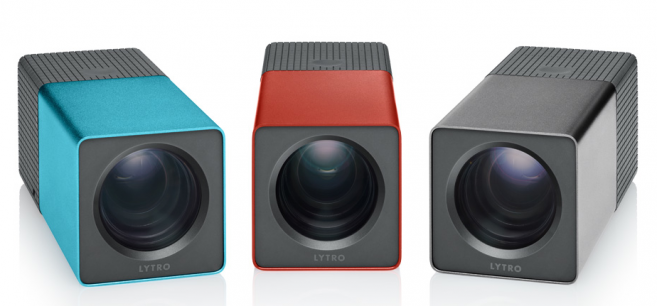
Steve Jobs Met with Light Field Camera (Lytro) Company's CEO

Steve Jobs Met with Light Field Camera (Lytro) Company's CEO:


In the upcoming Inside Apple book by Adam Lashinsky, it's revealed that Steve Jobs had expressed interest and subsequently met with the CEO of Lytro, the makers the first light field camera. The relevant book quote posted by 9to5Mac states:
The company’s CEO, Ren Ng, a brilliant computer scientist with a PhD from Stanford, immediately called Jobs, who picked up the phone and quickly said, “if you’re free this afternoon maybe we would could get together.” Ng, who is thirty-two, hurried to Palo Alto, showed Jobs a demo of Lytro’s technology, discussed cameras and product design with him, and, at Jobs’s request, agreed to send him an email outlining three things he’d like Lytro to do with Apple.
Lytro received a lot of press last year when the first of its light field cameras went on sale in October. The product even received Popular Science's 2011 Innovation of the Year.


Light field cameras are a different take on photography by capturing "the entire light field" and saving all that information into a single file. Photographers can then edit the file afterwards in a number of unique ways -- including refocusing the image. This video walks through this unique ability:


One of the limitations in the early light field cameras is a relatively low resolution. The first Lytro camera produces final photos of only 1.2 megapixels (1,080x1,080). The cameras also don't take any video and start at $399 for an 8GB model. The camera carries an elongated form factor that seems to be a result of the unusual optics required.


Given the hype surrounding the technology, it's perhaps no surprise that Steve Jobs found interest in meeting with the young company. That meeting, however, is getting special attention due to the fact that Walter Isaacson had said that Jobs wanted to reinvent television, textbooks and photography.


Apple just released their first digital textbooks for the iPad, and is expected to get into the television space. Apple's future goals for photography, however, remain unclear. Apple includes a digital camera its iPhones and has made progressive improvements in camera quality over the past few generations. While Apple no longer makes a standalone digital camera, they were one of the first to product a consumer targeted digital camera back in 1994.


Given the popularity of smartphones and the subsequent decline of point and shoot camera popularity, we'd expect any future Apple movement into photography would be centered around the iPhone.

Sunday, October 16, 2011

Panoramic ball camera; toss to snap a picture

Panoramic ball camera; toss to snap a picture:re-blog from Hack A Day!


This odd-looking ball can automatically take a panoramic image whenever you throw it up into the air. Seriously, that’s then entire set of operating instructions for the device. Inside, a 3D printed frame hosts an array of 36 cellphone cameras, each capable of taking a two megapixel image. Also included is an accelerometer. When it senses the change in momentum associated with the apex of its vertical trajectory it snaps an image with all of the cameras at the same time. The result is a spherical image with no obstructions-like a tripod or other support mechanism. The images are automatically stitched together and displayed on a computer which allows the user to pan and zoom.

The whole story is told in the video after the break. The example images shown are quite good, although there are a few artifacts where the segments meet. Most notably, color variances between the images captured by different CCD modules. We’d image that this can be fixed automatically in software if a talented programmer were willing to put in the time. The thing about spherical photos is that methods using post processing to unwrap an image always have some distortion to them. With that in mind, we think the ball camera is as good a solution as we’ve seen.
[Thanks Gregory and Hans]

Thursday, August 11, 2011

Hayashi Natsumi’s Levitation Self Portraits

Hayashi Natsumi’s Levitation Self Portraits:re-blog from TheCoolist


Zen philosopher Suzuki Daisetz once explained that the experience of zen is like ordinary, everyday life, except about two inches off the ground. Photographer Hayashi Natsumi apparently understands this first-hand, as exampled in her collection of levitative self portraits. Natsumi is the central subject of her photography, a floating focal [...]


Wednesday, August 3, 2011

At Home With Banksy

At Home With Banksy: re-blog Computerlove

20110802_193017_athomewithbanksy_juliakimsmith.jpg


A look at Julia Kim Smith's photo project, At Home With Banksy.

Read more

The world's largest stop-motion animation

The world's largest stop-motion animation:re-blog Computerlove

Gulp' is a short film created by Sumo Science at Aardman, depicting a fisherman going about his daily catch. Shot on location at Pendine Beach in South Wales, every frame of this stop-motion animation was shot using a Nokia N8. There's also a making of. Cool.
Gulp. The world's largest stop-motion animation shot on a Nokia N8. on Vimeo
20110803_143936_gulp.jpg


Sunday, June 26, 2011

Herbst

Herbst:re-blog from The Art of the Title Sequence

This image has no alt text


In a beautifully minimalist re-telling of the first World War drama Herbst, Clemens Wirth captures moments in the lives of the characters. A man covetously looks on an idyllic scene from afar, a woman waits alone at a window as the day crawls by, and bombs fall on men frozen in time as the highly saturated world moves around them, all helpless to a great and terrible machine acting upon them. Mixing crisp type with the sensuous ink drawing of the movie’s title and set to the brooding piano of Lukas Wagner, we bear witness to the characters’ call to arms, their tragedy, and the collateral damage borne from their delicate arcs.


With a planned release of Spring 2012 and filmed on location in Vienna and the Austrian Mountains, Herbst (German for “Autumn”) is a work from alumni and students of the University of Applied Sciences Salzburg.


- Jonathan Dube, Contributing Author


PROJECT BREAKDOWN


Title design enthusiast and macro photographer Clemens Wirth details the creation of the end credit sequence for us.

Clemens Wirth: The first thing I did was read the script again, to [recapture] the feel of the story. I also watched movies like All Quiet on the Western Front and worked my way through WWI illustrated books to sensitize me more to the topic. I thought of the toy soldiers like the ones in Toy Story and, as I'm a macro enthusiast and because I've gathered some experience in this area, I decided to make the titles on a small scale. After some investigation I found the right figures (pewter figures have limitations and were ruled out).


Model examples (3 images)


I agglutinated and colored them and they became my actors. Instead of letting the characters move, the idea was that the environment around them should have a slight motion, achieved with various weather effects and also some interaction with light and shadow. For example, the girl at the window was time lapsed so that the sunshine moves on the floor.


Initial photographic tests (7 images)


I always try to combine and mix several techniques and make most of practical effects, but with this scale it becomes difficult, so I had to add some in post production. I tried to make very “photographic” images, each scene different, minimalistic but detailed. The footage was captured with smooth dolly shots on a DIY slider and my beloved Canon 5D Mark II equipped with a 100mm macro lens, with some camera movements done in post.


Shooting and editing setup (2 images)


In the film there will be smooth dissolves from real footage to ink drawings. I transferred this element to the titles with the drawings. I have to mention that I was also inspired by the Sherlock Holmes titles from Prologue for this effect, but I didn't want to overstate this transition, because it's just a small part in the actual film and that’s why it's only around the actual title.


Ink lettering tests (3 images)


The title consists of china ink with each letter captured separately (thanks to Philipp Gstrein for his help) and composited together in After Effects. The various handcrafted miniature sets were built with objects from mother nature and model making materials. It was not always easy to get the detailed look I wanted, but it was fun and gave variety to the working process on the computer.


[RSS & email readers: see full post for video]


Ink Tests (Click to Watch)


The music and sound design is Christoph Plohovich and pianist Lukas Wagner. As video and audio kissed the first time something really new emerged... this was the moment in which all efforts paid off.


Example of scale (Click to Enlarge)


Full details for our Herbst post are available at Art of the Title.

Sunday, May 15, 2011

Cinemagraphs by Jamie Beck and Kevin Burg

Cinemagraphs by Jamie Beck and Kevin Burg:re-blog from Computerlove


Jamie (Photography), and Kevin (Web Design/Motion) worked together creating beautiful and intricate animated gifs they called Cinemagraphs. Utilizing an old technique to create something new and beautiful with such attention to detail and love is truly impressive and inspiring!

20110512_005550_5659129000_625a7cf683_o.gif
20110512_005632_tumblr_ljmk0oCdjM1qeyuguo1_500.gif
20110512_005656_tumblr_ljvhcotgAi1qeyuguo1_500.gif
20110512_005715_tumblr_ljkk51MscO1qeyuguo1_500.gif
20110512_005757_5665230598_d8db1f8572_o.gif
20110512_005837_5658560637_149decff5c_o.gif
20110512_005936_5658552009_5589ea8336_o.gif
20110512_010023_billcunninghamp615.gif
20110512_010112_datenight615.gif
20110512_010145_5659126388_3f56c8807f_o.gif


“Our first few animated images were sequenced still shots looped in rapid succession which is a fairly common way of making an animated image. From there we began utilizing more fluid motion isolated in certain parts of an image to capture a moment of time, but also to un-freeze a still photograph by showing that moment’s temporal movement. The process involves still and video photography but editing is very manual and varies greatly from one to another so we’re routinely solving new problems when creating them...

If you want to know more about how they created these pictures, here is the link